What if sanitation could work without sewer lines, heavy maintenance or environmental damage? For millions across India especially in remote, high-altitude and infrastructure-starved regions this isn’t a hypothetical question. It’s a daily reality. DRDO Biodigester Toilets are one of India’s most practical indigenous answers to this challenge, combining science, sustainability and real-world usability.
Here’s why this technology is quietly transforming how we think about sanitation in India.
What Makes a DRDO Biodigester Toilet Different?
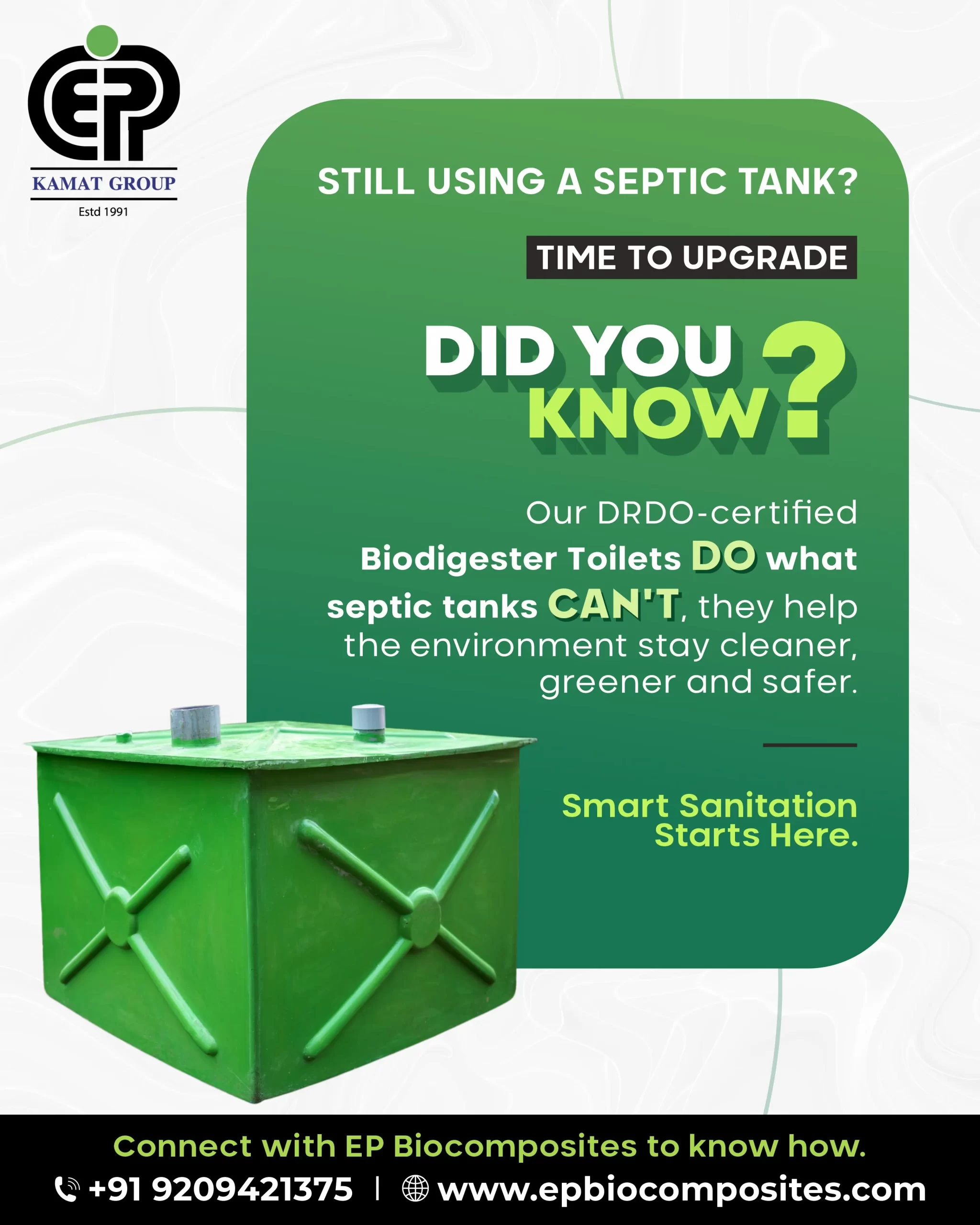
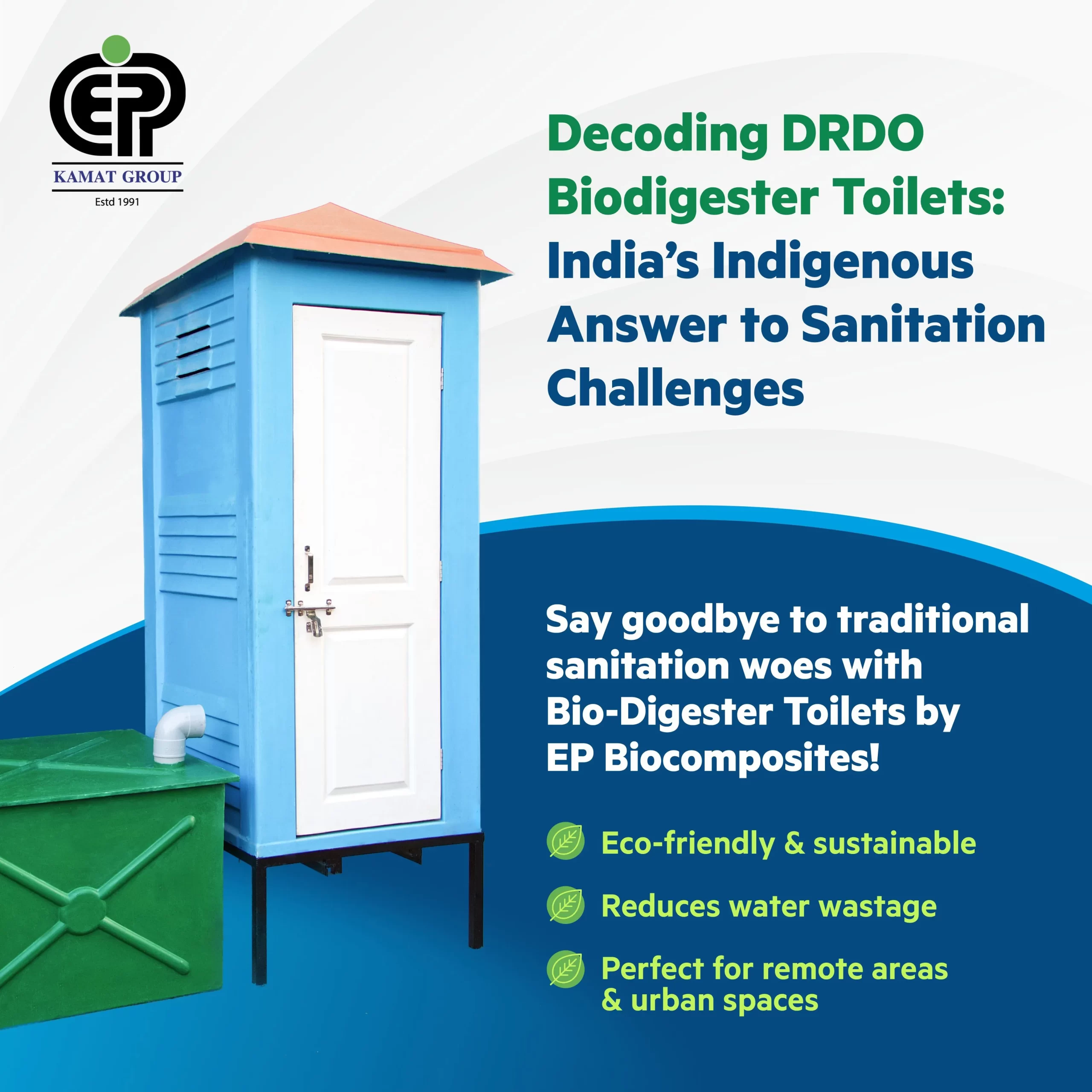
A DRDO biodigester toilet is designed to treat sewage waste right where it is generated, instead of just storing it. Inside the biodigester, specially developed anaerobic bacteria naturally break down human waste into water and harmless gases. Unlike traditional septic tanks that collect sludge and need frequent cleaning, biodigesters process the waste continuously, ensuring an odor free experience and reducing maintenance over time.
The Defence Research and Development Organisation (DRDO) developed this technology to address the sanitation needs of defence personnel stationed in India’s most challenging locations such as high altitude regions, extreme climates and remote areas without access to sewer systems. The system was engineered to perform reliably with minimal intervention, even under harsh operating conditions.
A Practical Solution for India’s Sanitation Challenges
Many parts of India still lack underground sewer networks, dependable water supply and adequate space for large septic tanks. In such settings conventional sanitation systems often prove impractical as they cause environment damage and are costly to maintain. DRDO biodigester toilets are designed to overcome these constraints as they eliminate the need for septic tanks, consume less water, prevent soil and groundwater contamination and reduce frequent maintenance like desludging, etc.
Hence, they are well suited for a wide range of applications including residential developments, schools, labour camps, highways, tourist facilities, defence installations and rural infrastructure projects where hygiene, reliability and long-term performance are essential.
Sanitation That Truly Supports Sustainability
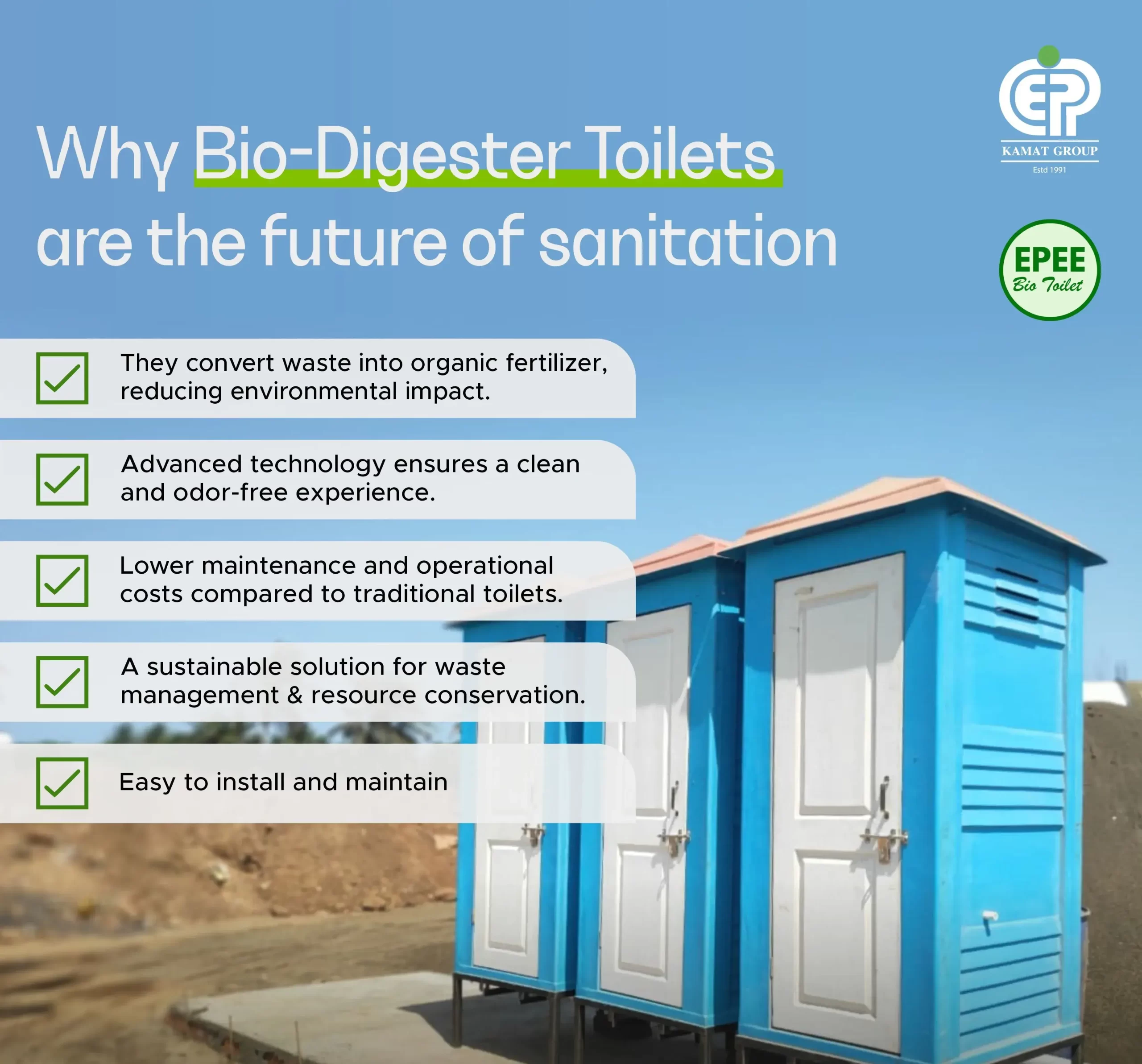
Biodigester toilets are not just about convenience or efficiency. They quietly address some of the biggest environmental concerns linked to sanitation. By treating sewage waste at source, they help prevent contamination of freshwater sources and reduce long-term damage to soil and groundwater issues that often go unnoticed.
Another important advantage is what doesn’t happen. With biodigester toilets the need for frequent desludging, tanker movement and waste disposal is greatly reduced. This means lower fuel consumption, fewer handling risks and zero environmental footprint compared to traditional sanitation systems. As India moves towards sustainable development, biodigester toilets reflect a clear shift by simply managing waste to treating it responsibly.
EP Biocomposites: Turning Proven Technology into Practical Solutions
While DRDO pioneered biodigester technology, its true value lies in how effectively it works outside the lab on real sites in real conditions. That transition from concept to dependable infrastructure is where EP Biocomposites comes in.
Over the years, EP Biocomposites has adapted DRDO certified biodigester systems for everyday civilian use, ensuring they are practical to install, easy to maintain and reliable across varied environments. Whether deployed in remote or off-grid locations, these systems are designed to function consistently without adding operational burden.
Manufactured using FRP (Fibre Reinforced Polymer) these biodigester toilets are built to withstand corrosion, harsh weather conditions and long-term wear. The robust design ensures durability and significantly reduces maintenance requirements. By deploying this proven technology EP Biocomposites is helping strengthen a sanitation ecosystem that prioritises safety, dignity and environmental responsibility… one installation at a time.