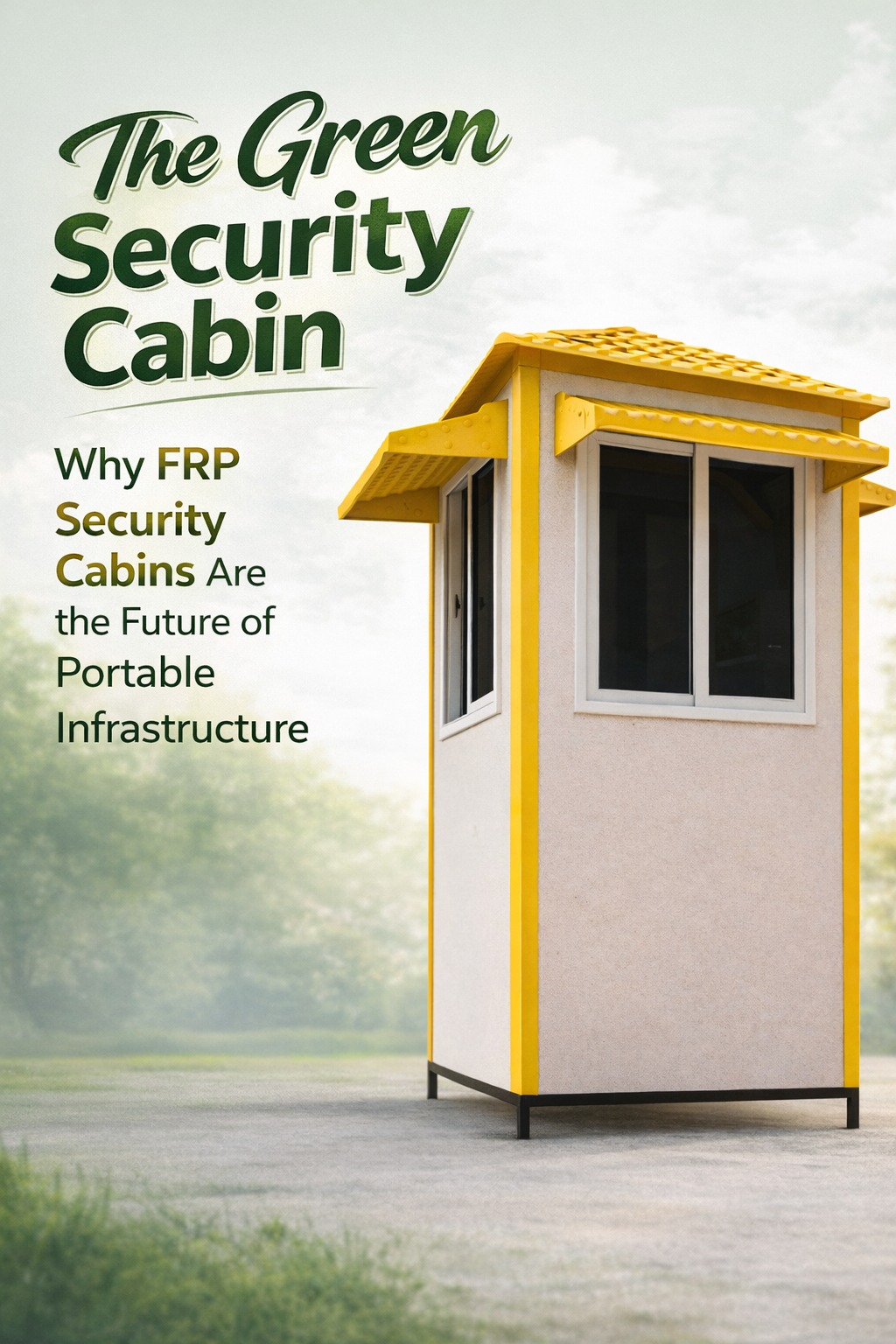
Take a look around any residential complex, factory gate, toll booth, construction site or institutional campus. One structure you will always find is a security cabin. It may be small, but it plays a big role.. which is protecting people, property and providing a workspace for security personnel who spend long hours inside it.
Surprisingly, this essential structure is often ignored when it comes to comfort, durability and long-term thinking. Most security cabins are built simply to “do the job,” without much consideration for how long they will last or how well they perform over time. That is now changing. As expectations around sustainability and better built infrastructure continue to rise, FRP security cabins are increasingly being seen as a practical, forward-looking alternative that simply makes more sense on the ground.
Why Traditional Security Cabins Fall Short
Most traditional security cabins are made from metal or wood. They may look perfectly fine when installed but in reality, issues start surfacing much sooner than expected especially in humid or coastal regions like Goa. Metal cabins are prone to rust and corrosion, while the wooden cabins usually fall victim to termites, moisture seepage and warping. What begins as a small patch-up soon turns into frequent repainting, constant repairs and eventually, complete replacement. Over a period the effort, downtime and maintenance costs far exceed the cabin’s original price, making these options far less economical than they appear.
Why FRP works where others fail
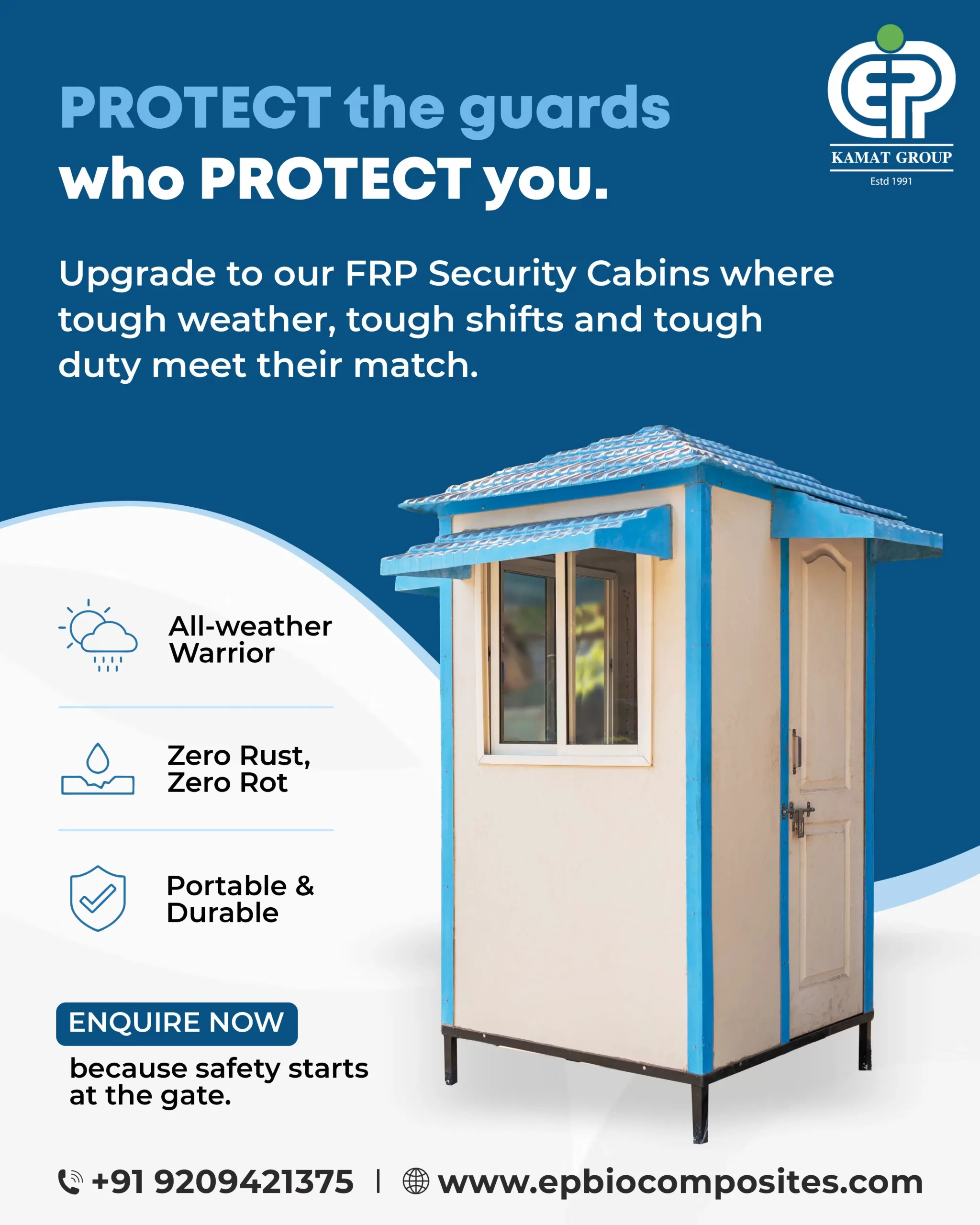
FRP, or Fibre Reinforced Polymer, was developed to overcome these issues. It provides the strength required for long-term use while still being lightweight and easy to handle during installation. More importantly, FRP holds up well in tough weather conditions and does not rust, rot or break down over time, making it a dependable option for outdoor structures.
FRP security cabins are:
- Not affected by termites and performs well in changing weather
- Does not rust / corrode, even in damp or coastal conditions
- Strong yet easy to move and install
- Low on maintenance and high on durability
Unlike metal, FRP does not rust. Unlike wood, it does’nt rot, warp or attract pests. This reliability makes FRP suitable for both temporary requirements as well as longterm installations where durability and low maintenance truly matter.
Built for Comfort and Quick Installation
One of the key advantages of FRP cabins is the ease of installation. Since they are manufactured in a controlled factory environment and delivered as ready units, there is minimal on-site work involved. This avoids disruption, reduces installation time and allows the cabin to be put into use almost immediately.
FRP cabins can also be adapted to suit specific site needs. Features such as windows for better visibility, adequate ventilation, lighting and electrical fittings can be incorporated to create a comfortable and functional workspace for security personnel.
EP Biocomposites – Making Infrastructure Smarter
At EP Biocomposites, we design FRP security cabins with real usage conditions in mind. Our focus is on creating cabins that last longer, require less maintenance and perform reliably in different environments whether in gated communities, commercial spaces, public areas or industrial locations. Using good-quality FRP means the cabins hold up well over time, with far fewer repairs required. This naturally reduces material wastage and helps control maintenance expenses in the long run. At the same time, it supports a more sensible way of building where materials are used efficiently and the structure continues to deliver value year after year.
As our cities grow, infrastructure needs to grow smarter too. FRP security cabins may be compact, but they clearly show the impact that thoughtful design and the right choice of material can have. As infrastructure requirements continue to grow, the emphasis needs to shift from simply adding more structures to selecting solutions that work better and stand the test of time.