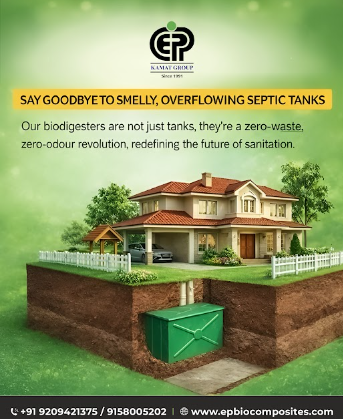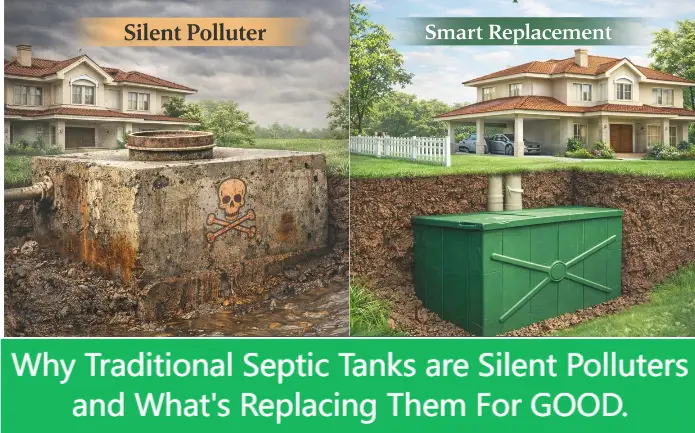
For decades, septic tanks have been the one and only solution for sewage wastewater in homes as well as commercial setups. They are simple to install and easy to understand and for a long time, they did the job.
But today, with growing awareness around sustainability, the one uncomfortable truth that is becoming hard to ignore is the fact that most traditional septic tanks quietly contribute to environmental damage. This is mainly because they only hold the wastewater and do not treat it. What is held within the tank is untreated sewage wastewater and over time, with leakages that seep into soil and groundwater or flow into nearby drains.
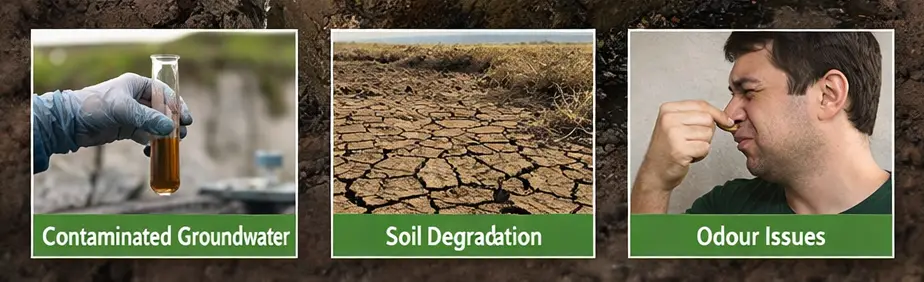
The impact isn’t always visible immediately, but it builds up and leads to groundwater contamination, soil degradation, bad odour issues, increased health risks, etc
As development increases, especially in regions like Goa, this becomes less of an isolated issue and more of a systemic one.
Biodigesters: The Next Generation of Sanitation
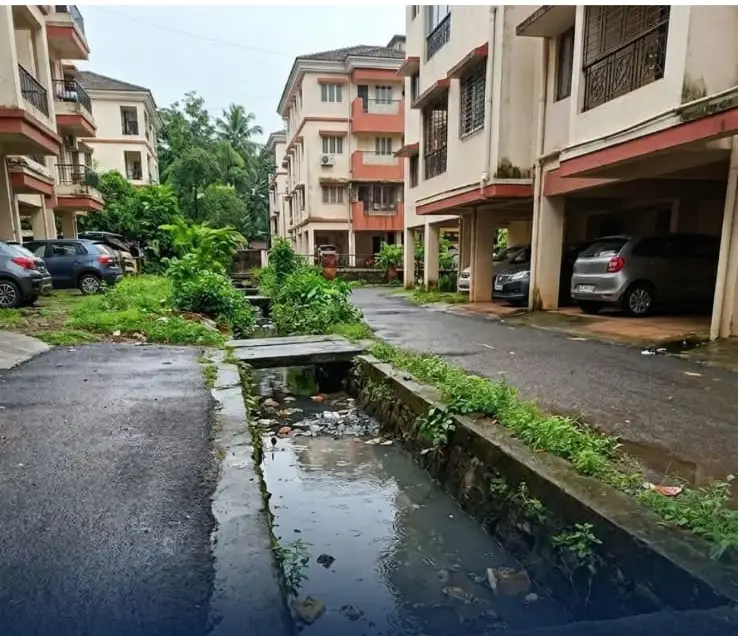
One aspect that often gets overlooked is the material used for the tank structure. Traditional concrete structures are prone to cracks, seepage and long-term deterioration, especially in harsh wastewater conditions. Over time, this only adds to the problem.
However, using corrosion-resistant materials like FRP changes that equation. It ensures structural integrity, prevents leakage and maintains performance over the long term. At present, there’s a clear movement away from the traditional septic systems towards biodigesters.
Unlike septic tanks, biodigesters treat waste within a sealed system using anaerobic bacteria. The result is significantly cleaner effluent, with reduced sludge, zero odour and far lower risk of contamination.
EP Biocomposites: Supporting Cleaner Sanitation Solutions
At EP Biocomposites, we’ve been working closely on this transition, moving away from outdated systems to more reliable, engineered solutions with the help of the Defence Research & Development Organisation (DRDO).
Our DRDO-certified biodigester systems are designed to:
- • Prevent seepage
- • Ensure consistent treatment performance
- • Reduce maintenance issues
- • Support long-term environmental compliance
As environmental responsibility becomes a priority, we need to ensure that our sanitation systems actually do what they are expected to do, both safely and sustainably. Septic tanks have grown outdated and are now being replaced by modern biodigester systems that treat waste more safely and sustainably. With advanced engineering and durable composite technology, EP Biocomposites is helping build cleaner sanitation infrastructure for a healthier and more sustainable future.
Water and wastewater management can’t remain an afterthought anymore. It’s no longer just about disposal – it’s about responsibility. Because real progress isn’t just about building more, it’s about building better.