
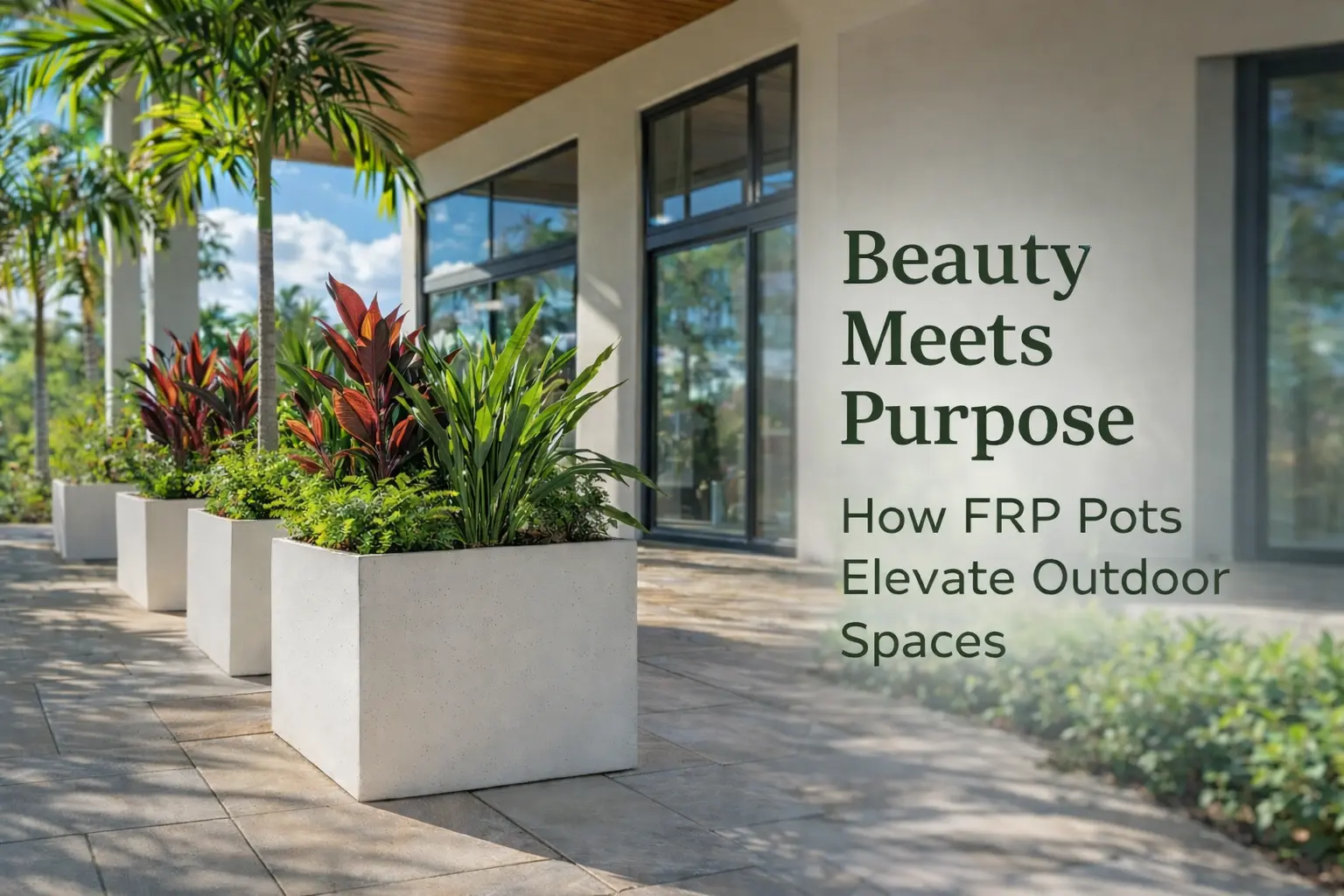
Walk into any modern resort, luxury villa, building complex or commercial property today. The landscaping is intentional. The materials are curated. The brand identity is carefully crafted.
Now look closer. Are the pots elevating the space or quietly undermining it? Because while plants soften architecture, the container defines the standard. And increasingly, plastic and metal are failing that standard.
The Plastic Problem – Cheap Today, Costly Tomorrow
Plastic pots are inexpensive, lightweight and easy to source. But in premium outdoor environments, they reveal their limitations as mentioned below:
- • Fade under UV exposure
- • Crack in extreme heat
- • Become brittle over time
- • Appear low-grade in high-end spaces
- • Contribute to long-term plastic waste
For residential use, plastic may be acceptable. For hospitality and luxury projects, it weakens perception. A premium space cannot afford a temporary material.
The Metal Myth – Strong, but not Smart
Metal pots often project durability and sophistication and strong does not always mean sustainable. Initially, they look sleek and modern, but outdoors, especially in tropical or coastal climates have the following drawbacks:
- • Prone to rust and corrosion
- • Heat up under direct sunlight, affecting plant health
- • Require coatings and maintenance
- • Heavy to relocate
- • Vulnerable to dents and surface damage
- • In high-humidity or salt-air regions, metal becomes a maintenance liability.
Why FRP Pots Are Changing the Standard
FRP (Fibre Reinforced Polymer) offers distinct engineering advantages. Plastic creates long-term waste. Metal demands energy-intensive production and repeated coatings.
FRP pots provide:
- • High structural strength with low weight
- • Resistance to moisture, salt air and temperature variations
- • Long lifecycle durability
- • Minimal maintenance
- • Custom design flexibility
For terraces, balconies, poolside decks and driveways where weight and weather matter, FRP delivers both aesthetics and performance. Unlike plastic, it doesn’t degrade easily under UV or heat. Unlike metal, it doesn’t rust, corrode or overheat and when engineered correctly, FRP pots can significantly reduce the need for replacements. A longer lifespan means less material consumption over time.
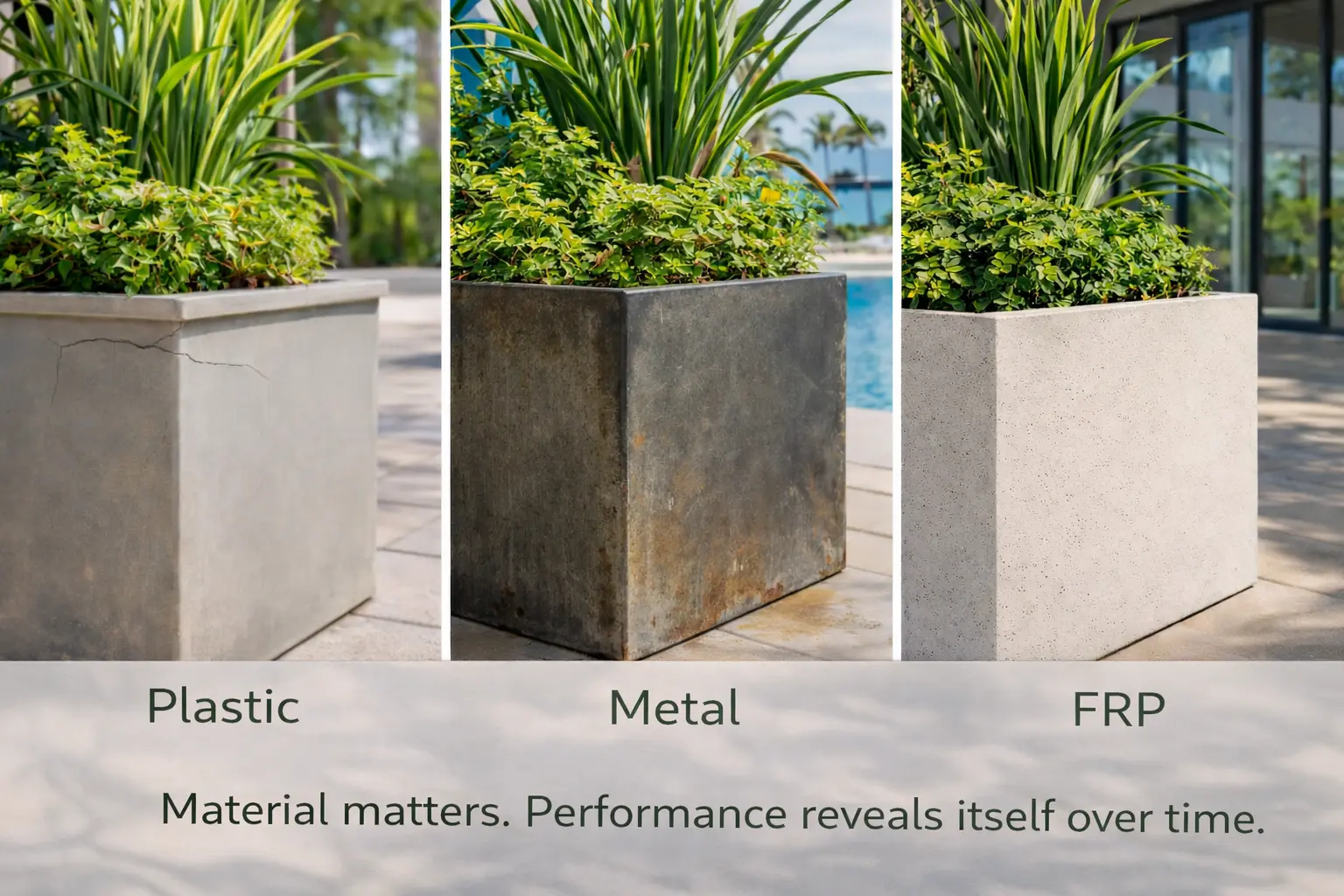
This is not just a decorative choice. It is a lifecycle decision. Sustainability without the greenwashing because sustainability is not about claiming eco-friendly, but it’s about lasting longer, performing better and reducing recurring resource use.
How EP Biocomposites Is Elevating Outdoor Spaces
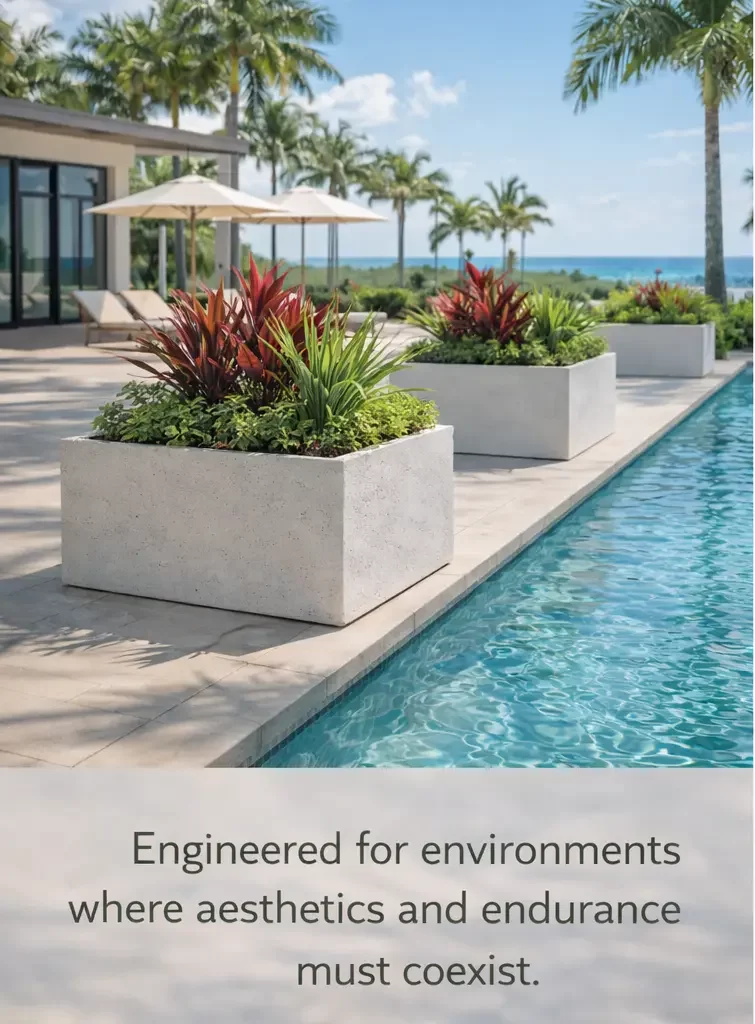
EP Biocomposites Ltd. has built its foundation on manufacturing durable, environmentally responsible alternatives to conventional construction materials. Bringing the same engineering mindset to outdoor aesthetics, our FRP Pots are designed for:
- • Coastal and tropical durability
- • Structural consistency across large projects
- • Custom finishes and textures
- • Long-term performance with minimal upkeep
Widely used in resorts, hotels, commercial complexes and landscaped developments, these pots combine aesthetic refinement with material intelligence. The goal isn’t just to beautify spaces. It’s to create outdoor environments that age gracefully.
The Real Question
If your project is positioned as premium…
If sustainability is part of your brand narrative…
If lifecycle cost matters…
Why choose materials that are already compromised?
Plastic is temporary. Metal is maintenance-heavy.
FRP is engineered for the long run. The market is evolving. The expectation is rising.
The only question is … Are you willing to make the switch to FRP?