
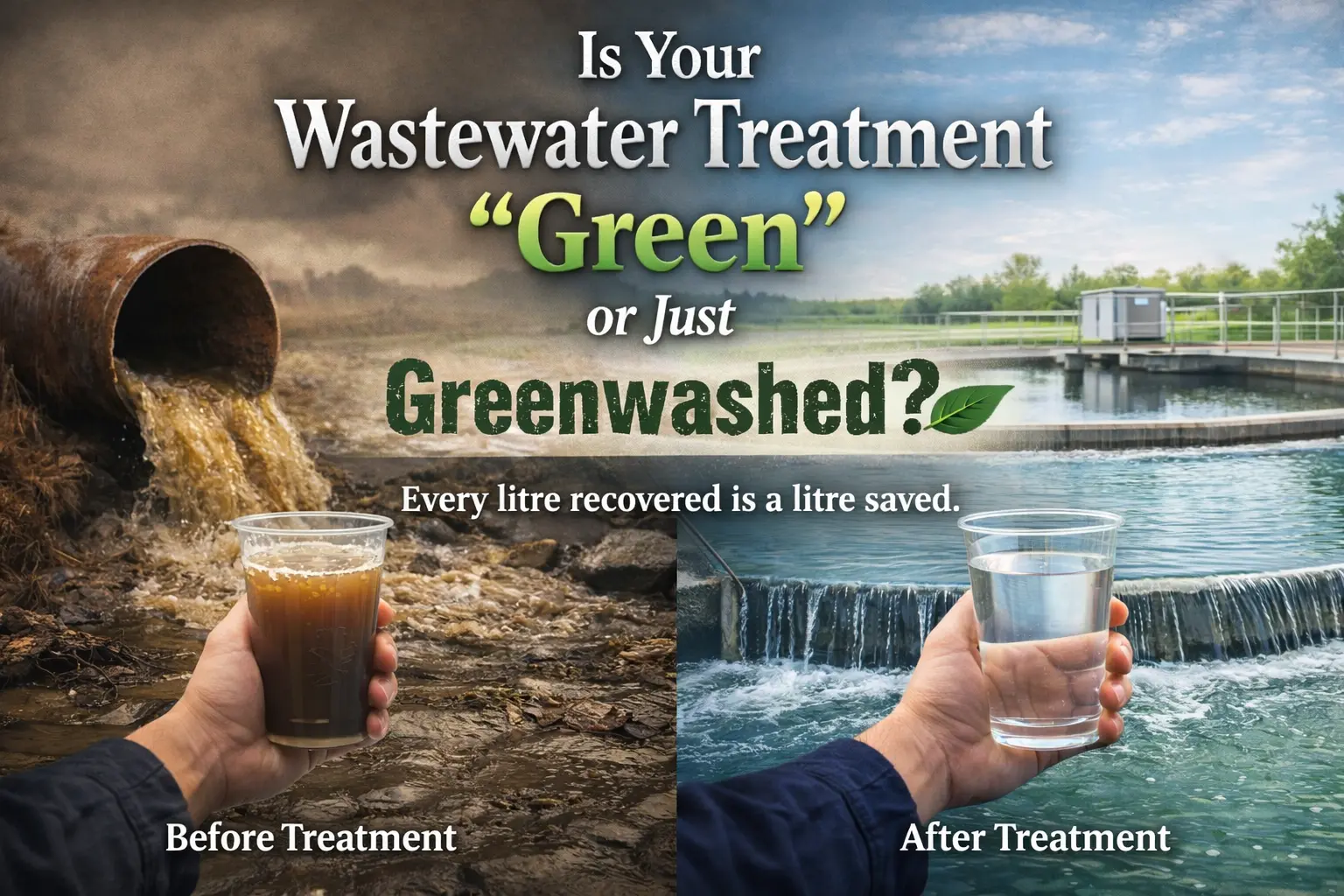
Everyone talks about sustainability today. Developers highlight eco-friendly projects. Industries showcase environmental responsibility. Hotels promise greener operations.
When you say your wastewater treatment system is green… What exactly makes it green? Is it because the system was installed? Or because it actually performs sustainably over time?
Because when it comes to Sewage Treatment Plants (STPs) and Effluent Treatment Plants (ETPs), the difference between green and greenwashed IS NOT marketing…. IT’S engineering.
The Illusion of “Compliant”
Compliance Isn’t the Same as Sustainability. Many facilities install wastewater treatment systems to meet regulatory requirements. Approvals are secured. Reports are submitted. “Sustainable infrastructure” gets mentioned in presentations.
But real sustainability requires asking tougher questions:
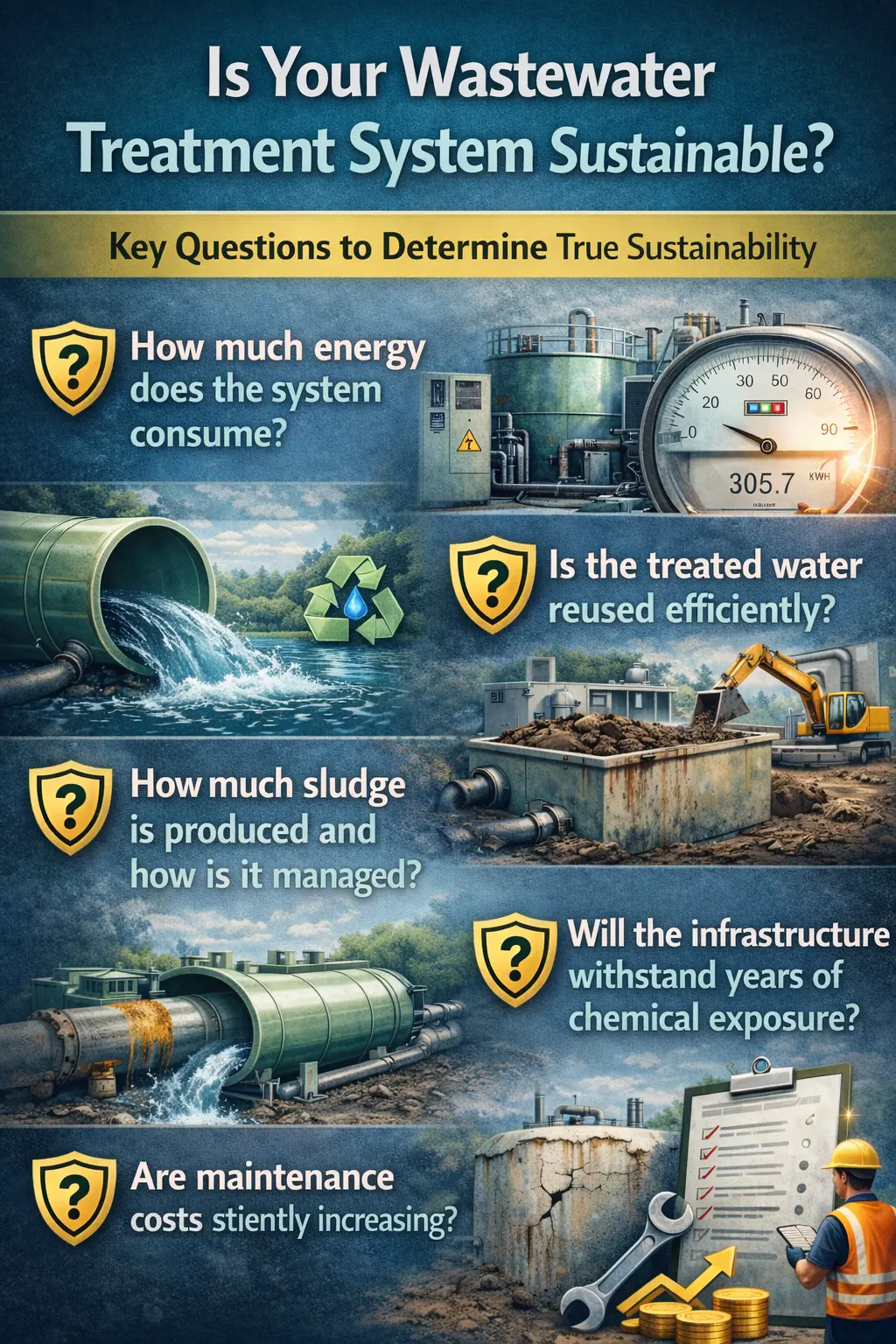
- • How much energy does the system consume?
- • Is the treated water actually reused?
- • How much sludge is generated?
- • Will the structure withstand years of chemical exposure?
- • Are maintenance costs silently increasing?
A system that leaks, corrodes, consumes excessive power or requires constant repairs is’nt truly sustainable, even if it passed inspection. This is because the environmental impact quietly grows. That’s where greenwashing often hides, inside infrastructure that appears sustainable but performs poorly over time. That’s greenwashing through infrastructure.
True wastewater sustainability requires lifecycle thinking, not just installation.
The Hidden Environmental Cost of Poor Design
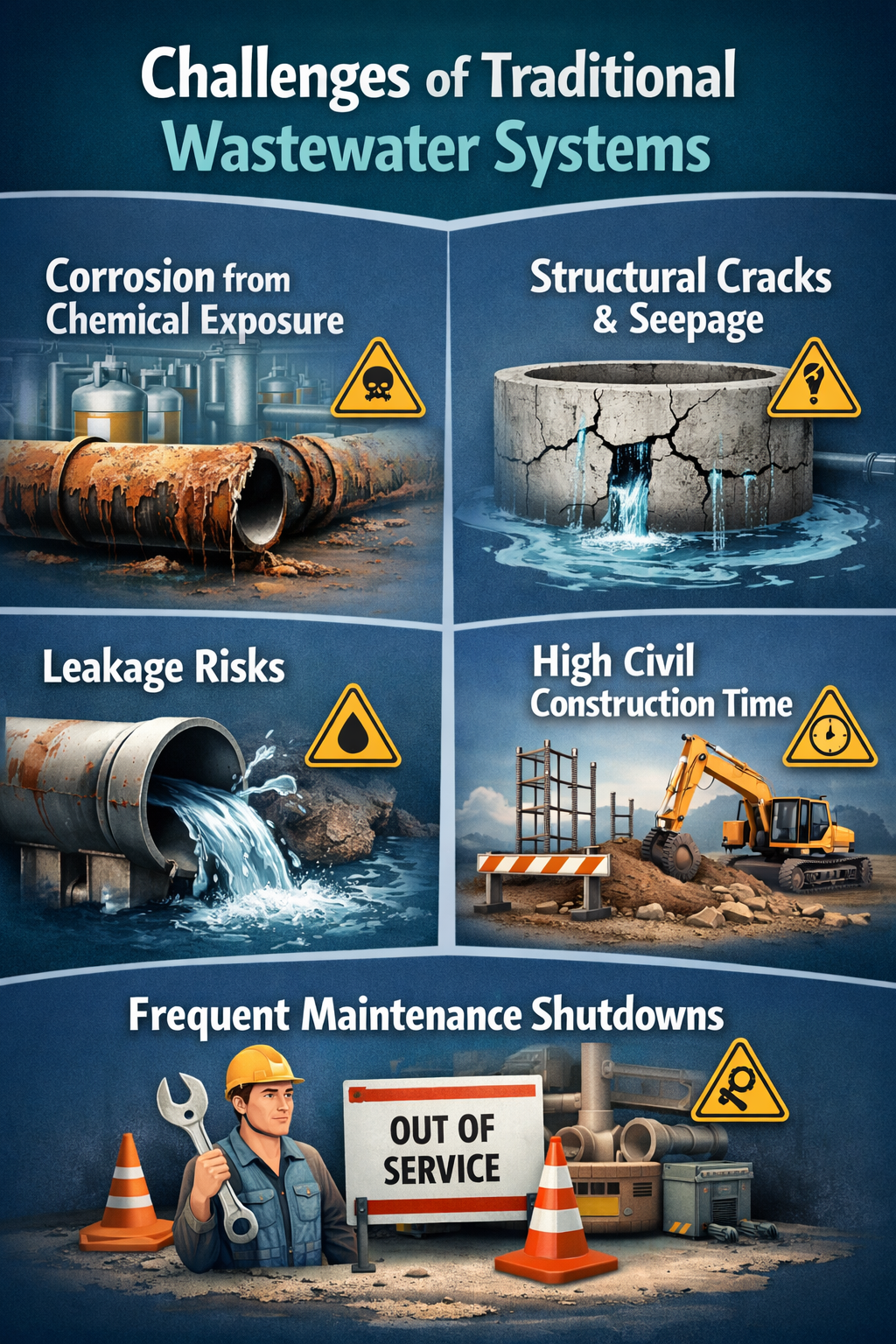
Traditional concrete or metal wastewater systems often face long-term problems:
- • Corrosion from chemical exposure
- • Structural cracks and seepage
- • Leakage risks
- • High civil construction time
- • Frequent maintenance shutdowns
Over time, these issues increase energy consumption, water loss and operational inefficiency — ironically increasing the environmental footprint of the system.
True sustainability requires thinking beyond installation and focusing on lifecycle performance.
What a Truly Green Wastewater System Should Deliver
A sustainable wastewater treatment solution should provide:
✔ Low energy consumption
✔ Efficient biological treatment
✔ Reliable water reuse
✔ Reduced sludge generation
✔ Durable infrastructure
✔ Minimal long-term maintenance
And most importantly, it should perform consistently for decades, not just during inspections.
Moving Beyond Greenwashing
At EP Biocomposites Ltd., wastewater systems are designed for long-term durability and efficiency. Sustainability in wastewater treatment isn’t about installation. It’s about engineering systems that perform efficiently for decades.
Our STPs, ETPs, and Biodigesters are built using FRP (Fiber Reinforced Plastic) instead of conventional concrete or metal structures.
This offers:
- • Complete corrosion resistance • Lightweight modular installation
- • Reduced civil work • Faster commissioning
- • Long lifecycle performance
The result?
More reliable treatment systems that support real water reuse, reduce freshwater dependency and help organisations meet environmental responsibilities.
Installing a wastewater treatment plant doesn’t automatically make a project environmentally responsible. The goal isn’t just regulatory compliance. It’s building infrastructure that remains sustainable for decades. In today’s world, sustainability claims are being examined more closely than ever.
Green is no longer just a label. It’s a performance standard.
Because sustainability should not depend on the inspection day, it should be visible every day the system operates.
